
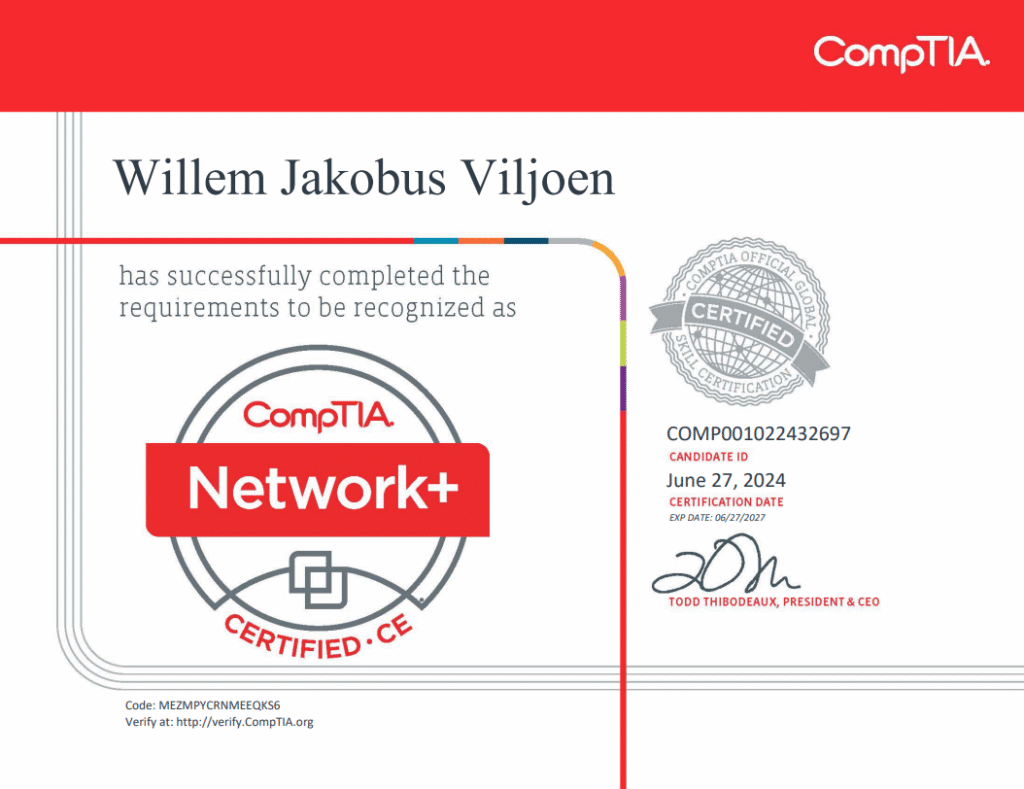
My CompTIA Network+ Certification Review
Out of the CompTIA trifecta (A+, Network+, and Security+), Network+ was hands down my favorite. It was the first time I truly started to understand how everything fits together — how data moves across the internet, how devices communicate, and how networks are built and managed. For anyone serious about cybersecurity, this cert is a game-changer.
What I Gained From Network+
Before this cert, networking was a bit of a black box to me. But once I dove in, I realized how incredibly smart and elegant networking is. You start to appreciate the thought and design behind how devices talk to each other, how protocols work together, and how data gets from Point A to Point B in milliseconds.
Network+ gave me a solid understanding of:
- IP addressing and subnetting
- CIDR notation
- Routing and switching concepts
- Common protocols like TCP, UDP, HTTP, DHCP, DNS, ARP
- Network troubleshooting
- Basic network design and configuration
- Network security principles
It’s not just dry theory. You learn the logic behind how everything works — which is incredibly helpful whether you’re managing a home network, configuring a small business setup, or pentesting enterprise infrastructure.
Security and Networking Go Hand in Hand
If you’re heading into cybersecurity — especially penetration testing — understanding networking is non-negotiable.
You need to look at an IP address and know how big the network is. You need to grasp how devices are segmented, how traffic flows, what services are exposed, and how data moves internally. Without that foundational knowledge, it’s like walking into battle blindfolded.
And even if you never become a network engineer, knowing how to “read the map” of a network is one of the most valuable skills you can have in infosec.
Real Talk: What You’ll Use vs. What You Won’t
I’ll be honest — you’ll learn things in Network+ that you’ll probably never use again. If you’re not going into pure networking, a lot of the cable specs, connector types, and protocol-specific routing details won’t come up often.
But that’s okay. The value comes from the big-picture understanding. Even if I never use certain details, they helped me think more critically about how networks operate. And I’ve definitely used this knowledge to fix my home network, troubleshoot issues, and understand what’s going wrong when things break — which is always a good feeling.
Why I Prefer Network+ Over CCNA (For Security Folks)
If you’re planning to be a pentester or work in offensive security, you don’t need the depth of a CCNA. You don’t need to master advanced routing protocols or dive deep into switch configurations.
What you do need is:
- A rock-solid grasp of IP addressing and subnetting
- Understanding how TCP and UDP work
- Familiarity with common protocols
- Network layout awareness
- Troubleshooting basics
Network+ covers all of this. It gives you everything you need to operate confidently in a networked environment without overwhelming you with details you may never use.
Final Thoughts
Even though it’s considered a beginner cert, I found it the most enjoyable and rewarding of the three CompTIA core certifications. It laid a strong foundation that I continue to build on today in my pentesting career.
Would I recommend it? Without hesitation. Whether you’re heading into sysadmin, cybersecurity, or support — or just want to understand how your internet works — Network+ delivers real, valuable knowledge.